AI Oversight for Small Business: Stop Ceremonial Reviews

- Near-zero approval rejection rates are a warning sign that reviewers are not thoroughly checking AI outputs.
- Reviewers miss critical errors due to automation bias, alert fatigue, speed pressure, and a lack of context.
- Effective AI oversight requires risk-tiering work so human reviewers can focus exclusively on high-stakes decisions.
- Reversibility dictates whether human approval occurs before execution or as a post-action review step.
- Oversight checkpoints must provide reviewers with full context, including model confidence and reasoning, to enable meaningful challenges.
A reviewer sits in the chair. The approval step is wired into the workflow. The audit trail looks complete. And bad outputs are going out the door anyway. This is ceremonial review: the person has the title but not the time, the context, or the authority to interrupt the model at the moment it matters. Oversight that cannot stop a wrong output is not oversight. It is decoration with a paper trail. Real AI oversight for small business is not more sign-offs. It is better-designed ones.
Why present reviewers still miss bad outputs
Four mechanisms explain most of it: automation bias, alert fatigue, speed pressure, and thin context. Two of them are where you will recognize yourself.
Automation bias is the one that catches careful people. Structured output reads as authoritative. A clean checklist with every box filled and confident, decisive language gets approved in seconds. The polish did the persuading. The reasoning underneath was never tested, because a well-formatted answer does not feel like something you need to challenge. That instinct is exactly the vulnerability.
Thin context is the other. The reviewer sees the conclusion, not the inputs, the policy rule that applies, the model's confidence, or what happens downstream if it is wrong. That is not review. It is a blind pass or fail on a recommendation the reviewer has no means to interrogate. If you cannot challenge the recommendation, the loop cannot be trusted to catch anything. A signature without leverage is theater.

The green dashboard is the warning sign
Here is the part most owners get backwards. An approval queue that almost never escalates looks like excellence. Usually it means nobody is looking.
Near-zero rejection stops being a quality signal the moment it becomes a habit. It starts masking the failures no one is catching. Your compliance dashboard glows green while errors accumulate underneath it, and the green is the reason you never go looking for them. A queue that is always approved is not proof the system works. It is a symptom worth investigating.
An approval queue that almost never escalates looks like excellence. Usually it means nobody is looking.
So stop counting approvals and start measuring review quality. Four numbers expose it. Override rate tells you whether reviewers ever say no. False accepts tell you what slipped through and did damage. Escalation rate tells you whether hard cases reach a human at all. Time-to-review tells you whether anyone is actually reading. A reviewer approving 99% of items at three seconds each is a finding, not a success. Counting approvals tells you the gate is moving. It does not tell you the gate works.
If you want a rigorous way to test whether your reviewers catch deliberately subtle bad outputs, that belongs in your evaluation layer, covered in our eval guide for custom AI workflow agents. Do not assume a checkpoint is effective until you have tested it.

Design the checkpoint, don't staff it
You cannot fix ceremonial review by hiring more reviewers or running another training seminar. This is a system design problem, and it responds to design.
Start by risk-tiering the work. An internal first-pass draft is not the same risk class as a client commitment, a refund, or a payment. Demanding human approval for everything equally is what makes approval meaningless. Reviewers drowning in trivial items lose the attention they need for the dangerous ones.
In professional services that might mean a routine internal memo waves through while client-facing advice stops for review. In a trades business, a scheduling suggestion passes but a quote sent to a customer does not. In retail, a product description flows but a pricing change or an inventory write-off waits.
Then give reviewers real leverage: clear escalation paths, the ability to reject an item without halting the whole process, and a channel to feed corrections back so the same error does not return next week. A reviewer who can only approve is not a control.
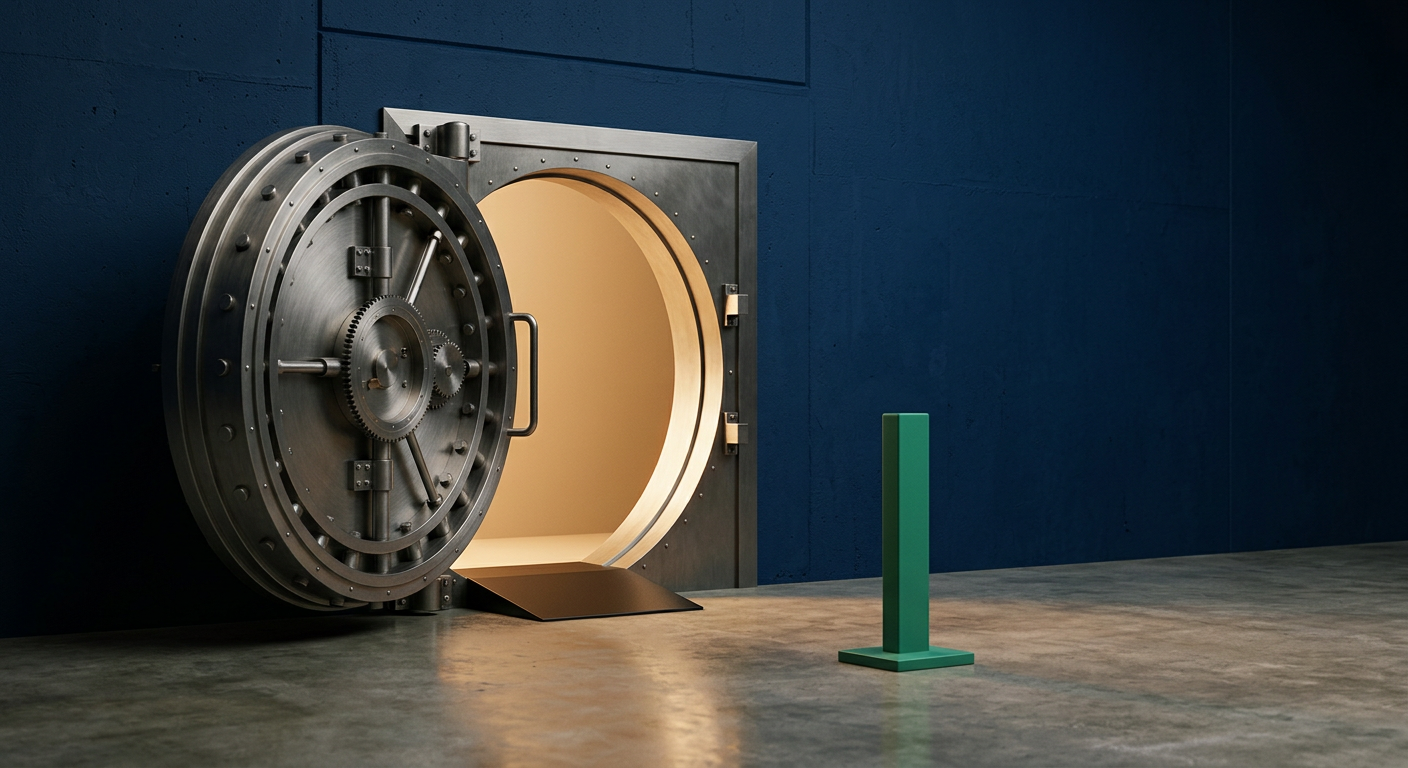
Reversibility decides where the human sits. If an action cannot be undone, the human goes before execution, not after. A check that lands after the payment cleared is a record of the mistake, not a defense against it. One-way doors get a human in front of them. Everything else can be reviewed on the way through.
Finally, show the reviewer the inputs, the model's confidence, and the rationale behind the recommendation. Usable context is what makes a challenge possible. Without it, you are back to a blind pass, no matter how senior the person signing.
Deciding where automation should stop and a human should take over is the harder question underneath all of this, and our cornerstone guide on controlling where automation stops works through that boundary across your whole operation. This post is what happens once you have drawn the line and need the checkpoint to actually hold.
Put your own loop to the test
Bring one regulated workflow to a Webspenser oversight review: document review, client-facing guidance, or an approval chain where a wrong output has a cost. We will map where your reviewers actually sit, what they can see, and what authority they hold, then redesign the checkpoint to give them real leverage. The goal is a checkpoint that can stop the output, not one that documents it after the fact. Before you book anything, go check your own escalation rate. If it is near zero, that is the tell.
Find Out Where Your Review Loop Fails
In 60 minutes, we'll map exactly what your reviewers can see, what authority they hold, and where the checkpoint needs to be rebuilt.

More from the blog
Keep reading and learning



Every other Tuesday, The Human Factor takes one psychological principle, drops it into a real moment in a small business, and shows what an automation does about it. Three minutes to read. No tutorials, no jargon, no AI hype. Just the reason your intake form never gets finished or your best customer goes quiet after a price change, and a fix you could have running in a day.
The moment — A real scene from a small business: who's in it, what they're trying to do, and what they do instead
Why it goes wrong — The psychology behind it in plain terms, explained through the moment rather than the textbook. One principle per issue
What the automation does — The fix, laid out as a simple flow, and what actually changed in hours or dollars